The wrong first book ends more English reading habits than any grammar rule does. A book slightly too hard turns twenty minutes of reading into two pages and a headache, and the reader concludes they lack discipline. The book was simply above the level where reading stops being reading and turns into translation.
This guide is a ladder for an adult beginner. It starts free, buys one thing at a time, and gives every book a level, a reason, and a ten-minute test you run before you pay.
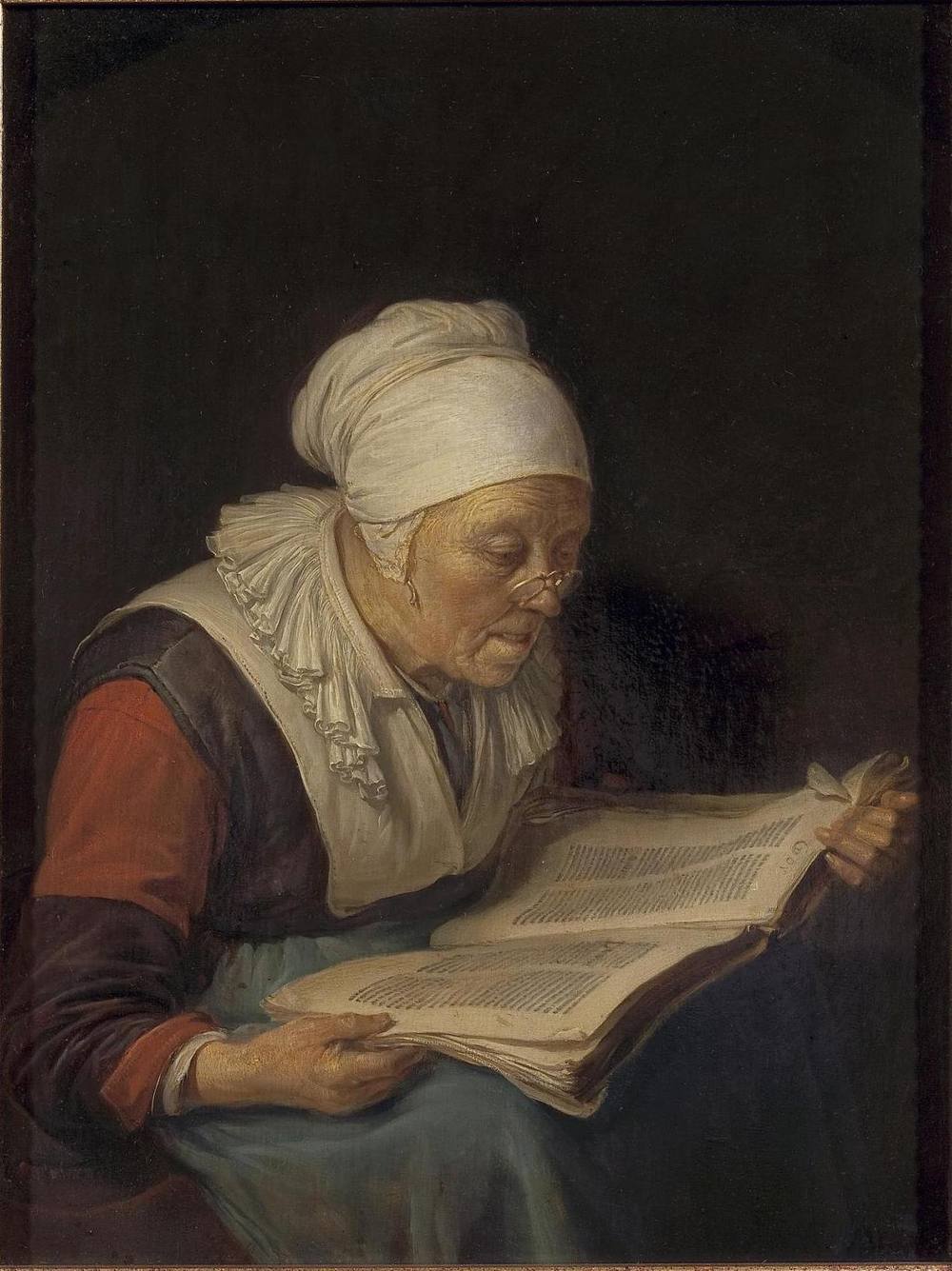
Start with the level, not the title
A book is right for you when you already know about 95 words in 100 on its pages.
Two numbers on a cover do the choosing. Graded readers print a CEFR level (A1 to C1) and a headword count. A1 means a few hundred words; B2 means a few thousand. Pick the level where you know almost every word, not the level you wish you were at. Reading slightly below your pride builds speed. Reading above it builds a dictionary habit and kills the book.
Before you buy anything, run the ten-minute test in the section near the end of this guide. It counts unknown words on one page and tells you whether the book will teach you or defeat you. Use it on every book below, including the free ones.
Free books to start with tonight
Start free, because the first question is not which book to buy. It is whether English at your level feels readable at all.
British Council LearnEnglish Story Zone publishes free stories written for A2 to B1 learners, each with exercises. Read one tonight. The stories are short, the language is controlled, and the exercises tell you right away what you missed.
Project Gutenberg gives you the classics free, in the public domain. "The Gift of the Magi" by O. Henry (first published 1905; Gutenberg eBook #7256) is the best first classic for a beginner: a young couple, two gifts, one twist, and a plot you can retell in three sentences. The language is over a hundred years old in places, so a few words will look strange. The plot carries you past them.
Read one free story tonight, then listen to it. Free audiobook versions of the same public-domain stories exist on LibriVox. Read first, listen second, read again. The second read is where the words stick.
The first graded readers: pick one series
Once a free story feels readable, buy graded readers, not a real novel. Graded readers are stories written or rewritten to a controlled vocabulary, so you can enjoy a whole story without looking up every word.
Three series cover the same ground. Pick the one your bookshop stocks and stop comparing.
Oxford Bookworms Library runs across seven levels from A1 to C1, with more than 270 adapted and original titles. The Starter level sits at A1 with around 250 headwords, and Stage 1 covers A1 to A2 with around 400. Every cover prints the CEFR level and the word count, which turns choosing a book from a guess into a decision.
Penguin Readers runs from Starter to Level 7, with classics, contemporary fiction, biographies and non-fiction. Most titles have professional audio.
Macmillan Readers runs from Starter (around 300 basic words) to Upper (roughly 2,200). Like the other two, it mixes classics with modern stories.
If simplified classics feel thin to you, take the other route instead. Short Stories in English for Beginners (Olly Richards, Teach Yourself, 2018, 252 pages, ISBN 9781473683556) holds eight original stories at A2–B1, controlled to roughly the 1,000 most frequent English words. It is written for adults, not children, and each story comes with a glossary and questions. Our short-stories guide walks through it; when you finish it, the intermediate collection (2019, B1–B2, ISBN 9781529361568) is the next rung.
One finished graded reader teaches more than three half-read novels.
The ladder: from first story to first real novel
Read the ladder in order. Each rung is a book adults actually finish, with the level it fits and the one thing to watch for.
| Book | Level | Why it works | Watch for |
|---|---|---|---|
| Roald Dahl, Charlie and the Chocolate Factory (1964) and Matilda (1988) | A2–B1 | Short sentences, concrete words, plots you cannot put down | Invented words; do not look them up |
| E. B. White, Charlotte's Web (1952) | A2–B1 | Plain, graceful sentences; farmyard words stay concrete | A few 1950s rural American words |
| Louis Sachar, Holes (1998) | B1 | Short, punchy sentences; a plot that pulls you forward | Three timelines; track which story you are in |
| John Steinbeck, Of Mice and Men (1937) | B1–B2 | Mostly dialogue, short chapters, a realistic first serious novel | Rural dialect in the dialogue; read it aloud or with audio |
| George Orwell, Animal Farm (1945) | B1–B2 | Plain and unornamented; short, and the farm keeps words concrete | The allegory needs some history, though the book works without it |
| Kazuo Ishiguro, Never Let Me Go (2005) | C1 | Calm, restrained prose; short sentences; a conversational narrator | The narration circles and withholds; the accumulation is the point |
| F. Scott Fitzgerald, The Great Gatsby (1925) | C1 | Under two hundred pages, lyrical and precise, big cultural payoff | Dense metaphor and 1920s slang; linger, and use notes for the ornate passages |
| Jane Austen, Pride and Prejudice (1813) | C2 | Elegant, ironic dialogue; following Austen's wit is a course in English style | Long, formal sentences; read it after contemporary literature, slowly |
Do not skip rungs to reach a famous title faster. A finished book at your level teaches more than an abandoned masterpiece. When a rung feels easy, move up. When it feels like work on every page, step back one rung and finish that book first.
Four things that stop beginners on an English page
English pages fail beginners in predictable places. Our How to Learn English by Reading guide explains each one in full; here is the short version to carry into the bookshop.
Spelling is not sound. Though, through, thorough and thought share letters and almost nothing in sound. Pair reading with audio from the start.
Phrasal verbs hide the meaning in the whole phrase. Put up with, look up, give up: the verb alone tells you nothing. Learn the whole phrase as one item.
The past tense changes the word. Go becomes went, take becomes took. These are not new words. They are the same word wearing its past form.
Idioms mean nothing like their words. "Once upon a time" is not about time. When a sentence makes sense word by word but nonsense as a whole, look the phrase up as a phrase.
Save the base form, not the ending
This is the habit that makes a shelf of books pay off across books. When you meet went, do not save it as a new word. Save go, with went as one example of it. A vocabulary book that fills up with every form of the same verb is a book of duplicates.
The same rule holds for phrases. Save put up with as one item, with the sentence you found it in. A phrase learned inside its story is a phrase you will recognise in the next story. Lucerna's vocabulary book works the same way when you import your own EPUB, PDF or TXT: save the word with its sentence, and it stays attached to the book it came from.
The ten-minute sampling test
Before you buy any book, run this test on its first story. It takes ten minutes and it prevents most wrong purchases.
- Read the first page without a dictionary. Mark the words you miss, but keep going.
- Count the marks. A page holds about 200 words. Fewer than ten marks means you already know about 95 words in 100, and the level is right. More than twenty means below 90, and the book is for later, not now.
- Read the page again with the vocabulary list or translation. If the story now feels clear, the book will teach you. If it still feels opaque, the grammar is above you, not just the words.
- Read a page from the middle of the book the same way. First stories are the easiest in any collection; the middle tells you what you actually bought.
Count first, pay second. The count tells you before you pay whether this book will teach you or defeat you.
If a book passes both pages, buy it and finish it. If it fails, go back to the free stories for another month. The book will still be there.
What not to buy yet
A grammar reference is a second purchase, not a first. Essential Grammar in Use by Raymond Murphy (115 two-page units, A1–A2) is the best-known self-study grammar book in English, and it earns its place on the shelf beside your reading. But in the first few months, reading volume at an easy level does more for a beginner than grammar study does.
A coursebook is a backbone, not a book to read. English for Everyone Level 1 (DK) and English File Beginner (Oxford) give you a syllabus, exercises and audio. Buy one if you want structure, and use it beside your reading, not instead of it. Very few people finish a coursebook alone, and that is fine: even half of one provides a useful backbone.
Leave exam preparation books until you have an exam booked, and leave anything promising fluency in thirty days on the shelf. Children's stories are a warm-up, not a substitute: stories written for English-speaking children assume a native child's vocabulary, which is a different kind of hard. Learner books control the vocabulary on purpose.
FAQ
What is the best book for a beginner learning English?
Start with a graded reader at A1 level: Oxford Bookworms Starter or Stage 1, or the equivalent level from Penguin Readers or Macmillan Readers. Not the grammar book. In the first few months, reading volume at an easy level does more for a beginner than grammar study does.
How do I work out which level to buy?
Open the book at a random page in the middle and read it. If there are more than about two unknown words per hundred, go down a level. Graded readers print the CEFR level and headword count on the cover, which makes this straightforward.
Can I learn English from books alone?
You can reach a high level of reading and a reasonable level of writing. Speaking needs speaking and listening needs audio, so books alone will leave gaps. Books plus narrated stories plus whatever conversation you can find is the realistic combination.
What do I read after the first graded reader?
Climb the ladder above, one rung at a time, and read our What to Read After Your First Graded Reader guide for the step from graded stories to real books. Finishing an easy book beats abandoning a hard one, every time.
Edition details in this guide were checked on 8 November 2026 against publisher and bookseller listings and the three leading guides for this query. Lucerna does not supply books: bring your own EPUB, PDF or TXT file. It reads 71 languages, with deeper support for 12, and its AI translation and sentence analysis use your own API key, or a local model on desktop.