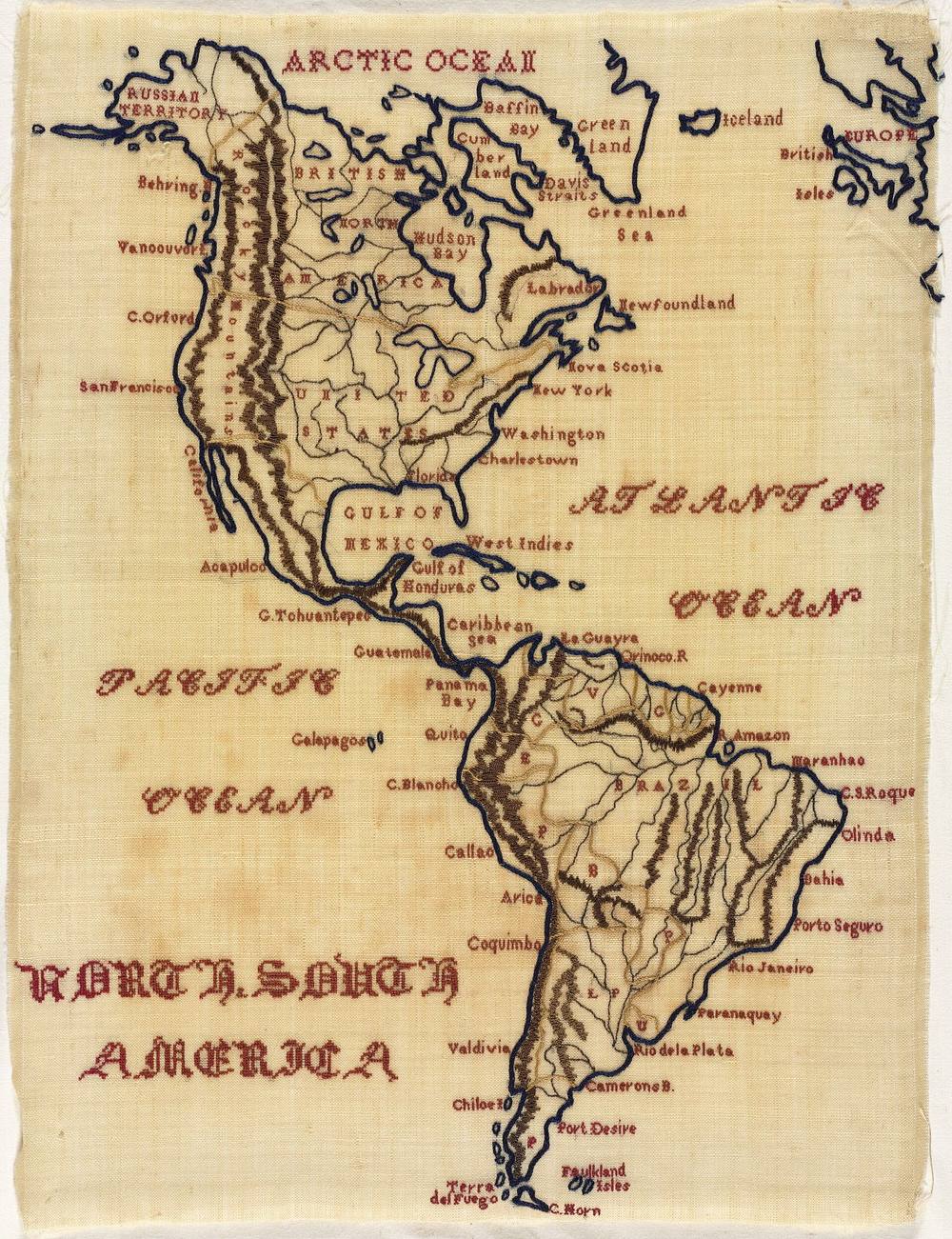
Search for "word atlas" and the top results talk about books of maps. That is the older meaning of the word, and it is what most searchers want. This post is about the other meaning: an atlas of words. Instead of countries on a map, the entries are words, arranged by topic, each one given a picture, a definition, example sentences, and a pronunciation. The question is not whether pictures are nice. It is which words a picture actually helps you learn, and what to do with the words it cannot carry.
One working example is Word Atlas, a free browser tool for IELTS vocabulary. It holds 7,298 words. Each word card pairs an original illustration with English and Chinese definitions, example sentences, collocations, word families, and usage notes, plus UK and US pronunciation and example-sentence audio. Practice modes include choosing the word, completing a sentence from a picture, recognising a word by listening, and spelling. A topic map lays the words out by theme, and a spaced-repetition schedule (built on the FSRS algorithm) decides when each word comes back for review. Progress stays on your own device, no account is needed, and there are no ads. The word list itself is also available as JSON and CSV data, so it can feed other study tools, including Anki decks.
Two honest limits come with the tool, stated on its own project pages. The text, illustrations, and audio were generated and have not been checked word by word by a human, so errors are possible. And the iOS app is in development, not yet released, so for now it is a browser tool. Treat anything it teaches you the way you would treat a helpful classmate's notes: useful, but worth checking against a dictionary when a word matters.
How a picture helps a word stick
A word on a flashcard gives you spelling and a translation. A picture adds a second way in. When you later try to recall the word, you have two routes back to it: the letters and the image. That helps most when the picture shows the thing itself. Concrete nouns are the easy win: a picture of a lighthouse, a harbour, a staircase. Verbs of visible action come next: to pour, to climb, to fold. Topic clusters help too: learning harbour, anchor, tide, and lighthouse together gives each word neighbours, and neighbours are easier to recall than isolated words.
The review schedule does the other half of the work. A word you just learned comes back soon; a word you keep getting right waits longer. That is the whole idea of spaced repetition, and Word Atlas builds it in with an adjustable target retention rate. The picture gets the word into memory; the schedule decides when to pull it back out before it fades.
Where pictures help most
Start with the parts of the list you can draw. Food, rooms, animals, weather, travel, jobs: topics where most words name things you can point at. Study one topic at a time through the map view, not the whole list in alphabetical order. Twenty words about a kitchen will stay with you longer than twenty words that share nothing but a first letter.
Use the picture as a test, not as decoration. Cover the word, look at the picture, and say the word before you check. If you can name it from the picture alone, the picture did its job. Then read the example sentence aloud, or listen to it, so the word also exists in a sentence and in sound, not only as an image. A word you can only recognise in a picture is a word you have not learned yet.
What pictures cannot teach
This is where an illustrated atlas runs out, and it is worth saying plainly, because the gaps decide how far the tool can take you.
First, word forms. A picture shows one form of a word. Languages change word shapes constantly: German verschwinden appears as verschwindet, verschwand, verschwunden, and Verschwinden, and all of them are the same verb. Russian книга appears as книге, книгой, книгах, and the verb pair делать and сделать are two sides of one idea. If a tool stores every form as a separate word, your list grows without your knowledge growing. A good vocabulary tool has to fold forms back to one base word and keep the grammar role each form had in its sentence. Pictures cannot do that folding; only word-form handling can.
Second, multi-word units. Many things you need to learn are not single words at all: fixed phrases and idioms of two to four words that have to be taken as one piece. A picture of a single word will not teach you a phrase, and learning the words separately can even mislead you about what the phrase means. When you meet a phrase in reading, save the whole phrase as one item.
Third, abstract words. You can draw a lighthouse. You cannot draw "however" or "although" or "nevertheless" in any way that tells you what they do. Abstract words are learned from sentences, from seeing the same connector do the same job in ten different sentences, not from an image. The same goes for pronunciation traps that live in sound, not spelling: in Russian, мука́ and му́ка are spelled the same and mean different things, separated only by stress. That needs audio and a stress mark, not a picture.
The pattern is simple. Pictures carry meaning you can see. Grammar, word forms, phrases, and abstract connectors have to be learned from sentences and from sound. An illustrated atlas is a strong start for the visible half of vocabulary, and it needs a reading habit for the rest.
From the atlas back to the book
Vocabulary tools work best when the words come from something you read, not only from a list. The loop that holds up over months looks like this. You meet a word in a book. You save it with the sentence you found it in. You review it, with its picture if it has one, until you know it. Then you meet it again in the next book, and that second meeting, in a new sentence, is what makes it yours.
That is also where a reader fits in. Lucerna is a reader for books you bring yourself: it imports EPUB, PDF, and TXT files and supplies no books of its own. Its AI features use your own API key, and the desktop version also supports local models, so there is no content-library subscription to rent. A free guest can use 1 book and save 5 words, and a free account allows 5 books and 200 saved words. If your words come from a book you chose, a reader that saves them with their sentences is the other half of the atlas. Our guide to learning vocabulary from reading explains how to pick which words are worth saving, and our guide to how to learn a language by reading explains how to pick the book itself.
Try it this week
Pick one topic, not the whole list. Work through its words with the picture covered, saying each word before you check it. Listen to the example sentence for every word you get wrong. Then open a book, or an article, in the language and look for one of those words in the wild. When you find it, save it with its sentence. That one meeting in real text is worth more than a second pass through the same picture cards.
If you use Word Atlas, check its words against a dictionary when a word matters for an exam or a piece of writing. Generated material can be wrong, and a wrong first impression is harder to fix than a slow first look. The tool is free, the list is open data, and the picture method is sound for the words it suits. Its limits are not a reason to skip it. They are the reason to pair it with reading.
Questions before you start
Is Word Atlas free?
Yes. It runs in a browser, needs no account, and shows no ads. Progress is stored on your device, and you can export and restore it.
Is there an iPhone app?
Not yet. The project pages describe an iOS app as in development. For now, use it in a browser.
Can I use its word list in Anki?
The dataset is published as JSON and CSV, and the project pages say it can feed other study tools, including Anki decks. The word text, illustrations, and audio use a CC BY 4.0 licence, which requires attribution, while the application code is MIT licensed.
Do pictures work for abstract words?
Only weakly. Abstract words and connectors are learned from repeated sentences, not from images. Use the picture cards for concrete words and topic clusters, and learn abstract words from the sentences where you meet them.
What should I do with word forms and phrases?
Save phrases as single items, and make sure your tool folds word forms back to one base word instead of counting each form as a new word. If your tool cannot do that, keep a note of the base word yourself when you save a form.
Facts about Word Atlas in this guide were checked against the project's public pages on 29 October 2026. The project is young and under active development, so check its own pages for the latest state before you rely on a detail.